




Revving Into Tomorrow: Dodge’s Timeless Muscle Legacy
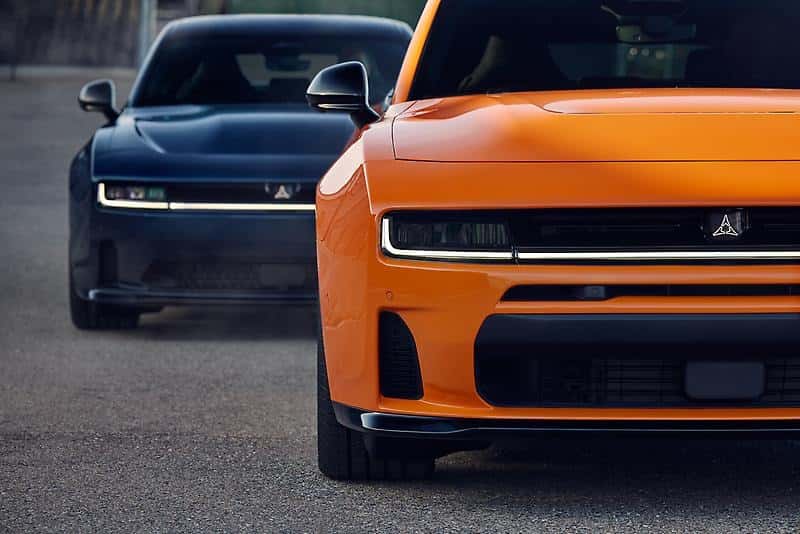
The road ahead for Dodge is electric, but the rearview mirror reveals tire smoke and V-8 thunder. Dodge has always been about curiosity-driven aggression, a brand that doesn’t just ask “What if?” but “Why not?” As the industry pivots toward a high-voltage future with the Charger Daytona SRT Banshee, we’re witnessing the latest evolution of a century-old spirit. However, to understand where this brotherhood of muscle is going, you have to understand the asphalt-crushing giants that paved the way. From the gritty machine shops of Detroit to the neon glow of the electric future, Dodge’s story is one of relentless power and cultural dominance.
 
From Bicycle Parts to Burnouts: Dodge’s Bold Beginnings
Before the “Brotherhood of Muscle,” there were just the brothers, John and Horace Dodge. Founded in the early 1900s, the Dodge Brothers Motor Car Company initially built its reputation on precision, supplying engines and chassis to Ford before striking out on their own in 1914.
Their early focus on durability, epitomized by the all-steel body, quickly transformed into an obsession with performance. By the 1950s and ‘60s, the “Red Ram” HEMI engines were dominating NASCAR tracks and drag strips, cementing the Dodge name as synonymous with raw, unadulterated horsepower and engineering innovation.
Legendary Lineup: 10 Dodge Classics That Defined an Era
Dive into these exemplary examples that showcase snapshots of Dodge’s automotive evolution.
Wayfarer Roadster (1949–52) – The Open-Air Rebel
Before the muscle car wars, there was the Wayfarer Roadster. As an entry-level offering, it was a rarity for its time: a true two-seat convertible with removable side curtains, evoking the pre-war era of open-air motoring in a sea of sedans.
- Engine: 230 cu. in. inline-six
- Power: 103 horsepower
- Trivia Alert: It holds the distinction of being one of Detroit’s last true roadsters since 1931, bridging the gap between utilitarian runabouts and the sports cars to come.
D-500 (1956) – The Pre-Muscle Pioneer
Often cited as an early muscle car, the D-500 was a factory hot rod built to legalize performance parts for NASCAR.
- Powertrain: A massive 315-cu-in HEMI V-8 cranking 285 horsepower via dual carburetors.
- Upgrades: Beefed-up suspension and larger brakes lifted from the Imperial line for handling prowess.
- Historical Gem: It famously shattered more than 300 speed and endurance records at the Bonneville Salt Flats, proving Dodge could run fast and hard all day.
Monaco (1965–77) – Sophistication with a Mean Streak
Dodge’s full-size luxury coupe went toe-to-toe with the Pontiac Grand Prix and Chevrolet Caprice, evolving from personal refinement to fleet favorite.
- Variants: Available in hardtop, sedan, and wagon trims, often powered by the legendary 440 Magnum V-8 mill.
- Pop Culture Punch: It achieved immortality as the “Bluesmobile” in The Blues Brothers film, confirming that a decommissioned 1974 Mount Prospect police car with “cop tires, cop suspension, and cop shocks” was virtually indestructible.
Ram Van (1970–98) – The Custom Craze King
Ideal for the ’70s custom van boom, this full-size hauler turned commutes into adventures, rivaling Ford and Chevrolet vans.
- Street Van Package: Dodge offered a factory “Street Van” kit that included high-back bucket seats, chrome slot wheels, and wild interior modification templates.
- Culture: It became a cultural icon of the “vanning” lifestyle, celebrated in Dodge’s “Adult Toys” marketing campaign for its versatility as a rolling lounge.
Dart Demon (1971) – Compact Fury Unleashed
Born to counter the Plymouth Duster, Dodge released the Demon, a compact performance car with a devilish attitude.
- Specs: A spirited 340 cu. in. V-8 engine generating 275 horsepower.
- Features: Blacked-out hood treatments and functional dual hood scoops.
- Legacy: It was an edgy and beloved performance bargain, serving as the spiritual ancestor to the modern SRT Demon.
Aspen Super Coupe (1978) – Petty’s Pocket Rocket
Although traditional muscle waned, the Aspen Super Coupe kept the flame alive with a visual package celebrating NASCAR king Richard Petty.
- Specs: A 360 cu. in. V-8 engine outputting 175 horsepower.
- Style: It featured bold wheel flares, spoilers, and window louvers, mimicking the look of NASCAR stock cars.
- Trivia: With production limited to roughly 500 units, it remains a rare “sticker muscle” collector’s item with NASCAR flair.
Dodge Magnum (1978) – Luxury Muscle in Transition
As the industry shifted toward personal luxury, the Magnum replaced the Charger with a focus on aerodynamics.
- Specs: Propelled by 318 or 360 cu. in. V-8 engines.
- Features: Sleek, clear covers over the headlights, available T-Tops, and plush “Corinthian” style interiors.
- Racing Highlight: Despite its slippery shape, Richard Petty struggled to find stability at high speeds, though he still managed several top-five finishes in the car before switching manufacturers.
Shelby Omni GLH-S (1985) – Hot Hatch Hero
Carroll Shelby took the humble Omni and turned it into a giant-killer.
- Specs: A 2.2-liter turbocharged, intercooled engine producing 175 horsepower.
- Trivia: It famously embarrassed V-8 muscle cars of its day in the quarter-mile, earning the name “Goes Like Hell S’more.”
Shelby Charger GLH-S (1987) – Turbocharged Trailblazer
This front-wheel-drive (FWD) coupe amped up the Charger name with Shelby magic.
- Comparison: The GLH-S’s 175 horsepower was a significant jump over the standard GLH-T’s 146 horsepower.
- Fan Fave: With limited production numbered via dash plaques, it remains a coveted piece of ‘80s turbo lore.
Dakota (1990–2011) – The Midsize Maverick
Bridging the compact and full-size truck segments, the Dakota carved out a niche with revolutionary power.
- Specs: It was the only truck in its class to offer a factory V-8 engine and featured the spacious Club Cab.
- Relevance: It narrowed the divide between compact and full-size trucks, outselling rivals with its balanced size and paving the way for efficient modern pickups before its 2011 discontinuation.
Enduring Power: Find Dodge’s Innovation Ignition Now at University Dodge!
Dodge masterfully balances blistering performance, cultural clout, and bold identity, qualities alive today with us, where classics inspire new rides. These vehicles remain iconic because they embody rebellion and ingenuity, from racetrack triumphs to silver-screen stardom, ensuring Dodge’s legacy accelerates forever.
More from University Dodge Ram
Exploring the Dodge Hornet GT Horsepower Specs
Photo Source/Copyright: Stellantis Ever wonder if a compact SUV can deliver sports-car thrills? The answer is a resounding yes, as the Dodge Hornet GT made a strong first impression in the compact SUV class, and much of that reputation rests on what sits under the hood. Its turbocharged four-cylinder generates 268 horsepower, a…
Turn Heads With the Dodge Durango Blacktop Package
Photo Source/Copyright: Stellantis The Dodge Durango stands out as a powerful option in the competitive three-row SUV market, blending muscle car heritage with family utility. That said, how can drivers further elevate this aggressive profile? The Dodge Durango Blacktop Package provides the ultimate styling answer, instantly sharpening the vehicle’s muscular silhouette with a darkened,…
What Can Dodge Durango Towing Capacity Handle?
Photo Source/Copyright: Dodge Have you ever wondered exactly how much weight a midsize SUV can haul before it reaches its limit? When properly equipped, the Dodge Durango pulls up to a best-in-class 8,700 pounds, a figure that rivals dedicated trucks and leaves most midsize competitors behind. That number isn’t fixed across the lineup, though….